Scientists Say
A weekly word defined, in a sentence and in context.
- Physics
Scientists Say: Muon
Tracking muons raining down on Earth can reveal new details of pyramids, volcanoes and thunderstorms.
- Animals
Scientists Say: Camouflage
Plants and animals alike hide in plain sight using this sneaky strategy.
- Math
Scientists Say: Prime number
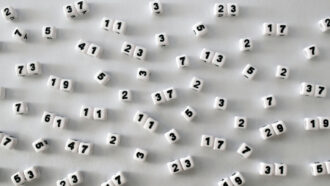
Prime numbers’ unique quality — being divisible only by themselves and one — makes them useful for encrypting secret information.
- Plants
Scientists Say: Fertilize
This word describes both a stage of sexual reproduction and the agricultural practice of adding nutrients to soil.
- Brain
Scientists Say: Deep brain stimulation
Through wires implanted in a person’s brain, this medical treatment can help treat various conditions.
- Humans
Scientists Say: Prehistoric
Researchers rely on prehistoric tools and other artifacts to study the vast stretches of time before recorded history.
- Physics
Scientists Say: Gamma ray
Lightning bolts, nuclear explosions, colliding stars and black holes all throw off this high-energy type of light.
- Animals
Scientists Say: Vertebrate
Animals with spines, or vertebrates, come in all shapes and sizes.
- Physics
Scientists Say: Ultrasonic
This word describes sound waves that have frequencies too high for human ears to hear.
- Chemistry
Scientists Say: Lignin
This rigid polymer transports water and gives trees their strength.
- Physics
Scientists Say: Supercool
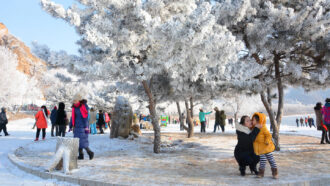
When a liquid is supercooled, it has been chilled below its freezing point without freezing.
- Math
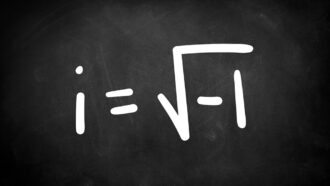
Scientists Say: Imaginary Number
These numbers may not be “real,” but they sure aren’t make-believe.