Earth

- Agriculture
Crops are being engineered to thrive in our changing climate
Plants are already the best carbon catchers on Earth. New research could make them even better.
- Animals
Toothed whales use their noses to whistle and click
Much as people do, toothed whales, such as dolphins and sperm whales, make noises in three different vocal registers.
- Earth
Take candy core samples with this science activity
Act like a geologist as you drill ‘core samples’ from candy bars using a straw. Can you identify the type of candy bar just from a sample?
- Agriculture
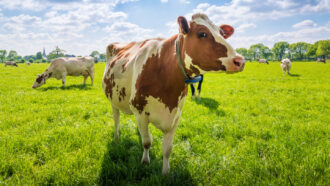
Cow dung spews a climate-warming gas. Adding algae could limit that
But how useful this is depends on whether cows eat the red algae, a type of seaweed — or it gets added to their wastes after they’re pooped out.
- Climate
Let’s learn about why summer 2023 was so hot
Human-caused climate change has played a big role in this summer’s historic heat.
- Oceans
Summer 2023 is when the ocean first turned ‘hot tub’ hot
Unfortunately, scientists worry that this atypical sea warming may actually be the beginning of an unwelcome new ‘normal.’
- Tech
Gravity ‘batteries’ might help a weighty renewable-energy problem
To store the energy generated by wind and solar power, researchers are looking at mammoth systems that raise and lower weights.
- Tech
High-tech solar ‘leaves’ create green fuels from the sun
Chemists make a liquid alternative to fossil fuels from carbon dioxide, water and the sun. Their trick? They use a new type of artificial leaf.
- Earth
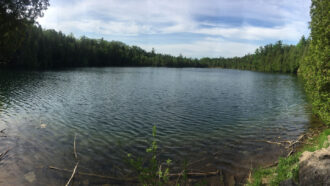
Canada’s Crawford Lake seems to mark when the Anthropocene began
Mud at the bottom of this lake holds a record showing how humanity has been changing our planet. But the Anthropocene isn’t an official new epoch yet.
- Tech
New thermal ‘cloak’ keeps spaces from getting too hot or too cold
A prototype fabric could help keep cars, buildings and other spaces cooler during heat waves while also reducing greenhouse-gas emissions.
- Oceans
How would a mermaid sound underwater?
Human ears don’t work well in the water. A mermaid would need marine creature features to talk to and understand her aquatic friends.
- Animals
Megalodons may have become megahunters by running hot
O. megalodon sharks were warm-blooded mega-predators. But when food sources dwindled, colder-blooded sharks may have had an evolutionary edge.