Archaeology
- Archaeology
Rats can chronicle human history
Rats have lived alongside people for thousands of years. Now, scientists can study the rats and their leavings to learn more about ourselves.
- Fossils
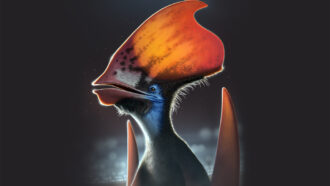
Bright-colored feathers may have topped pterosaurs’ heads
Fossil remains of a flying reptile hint that their vibrant crests may have originated 250 million years ago in a common ancestor with dinosaurs.
- Humans
Scientists Say: Denisovan
The Denisovans were a recently discovered population of ancient hominids.
- Physics
Muons reveal the inner worlds of pyramids, volcanoes and more
Tracking these subatomic particles can uncover surprising hidden structures.
- Humans
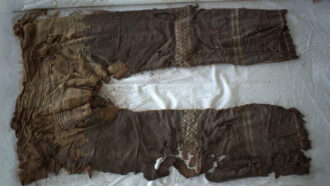
The earliest known pants are surprisingly modern — and comfy
This 3,000-year-old garment was not only stylish but also functional. By recreating it, scientists also unraveled its complex and multicultural origins.
- Archaeology
Our species may have reached Europe while Neandertals were there
Archaeological finds from an ancient French rock-shelter show periodic settlements by both populations, just not at the same time.
- Animals
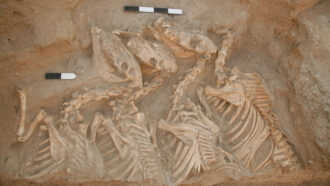
Mysterious kunga is the oldest known human-bred hybrid animal
People bred these animals — part donkey, part wild ass — some 4,500 years ago, probably for use in fighting wars.
- Archaeology
Vikings were in North America 1,000 years ago
Wooden objects provide the most precise dating yet for a Viking settlement on the coast of Newfoundland in Canada.
- Humans
Genetics show humans likely trace back to Africa
Our history began looking ever more complex once geneticists revealed our ancestors picked up new DNA as they traveled across time and continents.
- Archaeology
A medieval grave may have held a powerful nonbinary person
A 1,000-year-old grave in Finland, once thought to hold a respected woman warrior, may belong to someone who didn’t have a strictly male or female identity.
- Archaeology
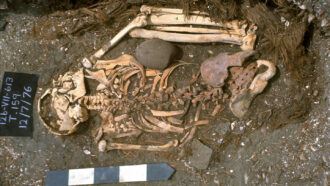
Skeletons point to world’s oldest known shark attacks
The newfound remains came from people who had lived thousands of years ago in Peru and Japan, half a world apart.
- Humans
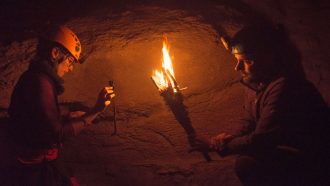
How torchlight, lamps and fire illuminated Stone Age cave art
Experiments with stone lamps and torches are helping scientists see 12,500-year-old cave art with fresh eyes.