Tech
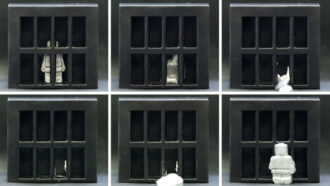
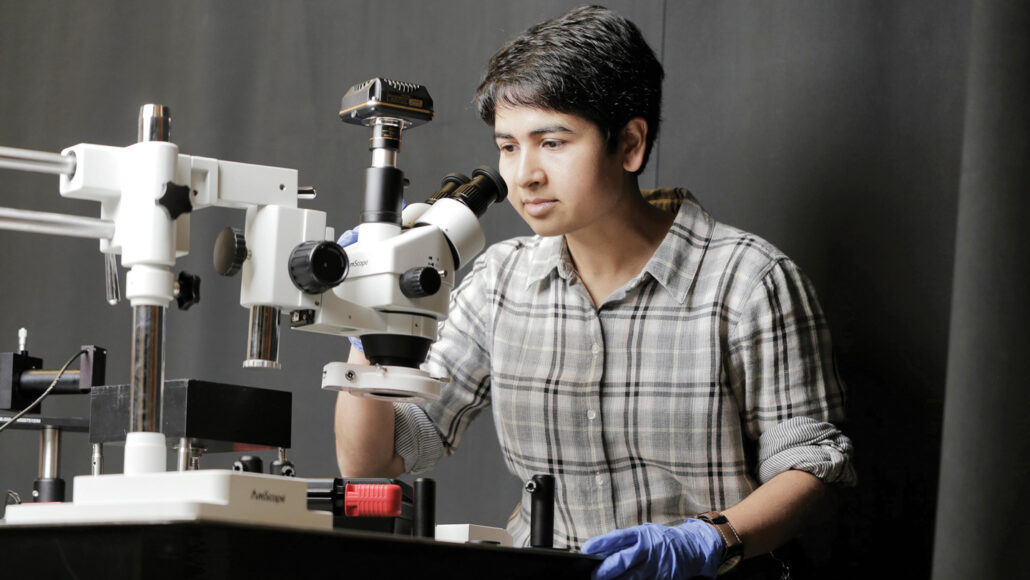
Nanobots can now enter brain cells to spy on what they’re doing
Fleets of advanced versions may one day be able to detect disease and then go about surgically treating it — without ever opening the skull.
By Nikk Ogasa
Modern Amazonians make nutrient-rich soil from ash, food scraps and burns. The soil strongly resembles ancient “dark earth” found in the region.
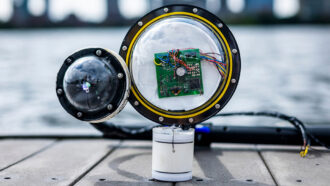
Needing no batteries, a new digital camera can run almost continuously to offer new, deeper insights into the ocean world.
A pole is either of two opposite ends of a molecule, magnet, battery, planet or other object.
When an object experiences a force, its change in motion — or acceleration — depends on its mass.
This thin, flexible and lightweight loudspeaker could reduce noise in loud spaces. It also might enable listeners to experience sound in new ways.
To protect crops against viruses in their home country of Taiwan, two teens invented a novel approach to fight blights.
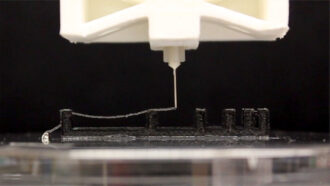
Bacteria with tweaked genes pump out proteins that can be used in a 3-D printer. With microbes in the mix, the living ink can make drugs or suck up chemicals.
Here’s what allows you to plug in and power up the devices in your life.
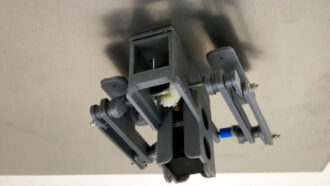
To climb walls, robot feet need to alternately stick and let go. A novel adhesive can do that. Its stickiness is controlled by electric fields.