Tech
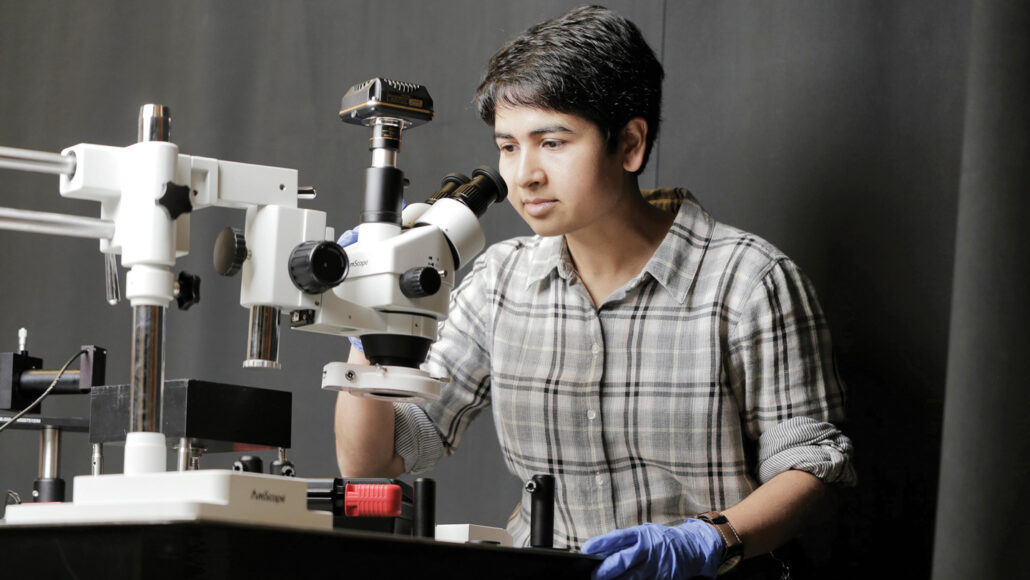
Nanobots can now enter brain cells to spy on what they’re doing
Fleets of advanced versions may one day be able to detect disease and then go about surgically treating it — without ever opening the skull.
By Nikk Ogasa
Piezoelectric materials turn mechanical energy into electrical energy — and vice versa.
Honeybees that flew over a voltage sensor sparked a new look at the effect of insects on electricity in the atmosphere.
Scientists thought washing machines were a leading contributor of microplastics. Now it appears dryers may be an even bigger problem.
Here’s what allows you to plug in and power up the devices in your life.
To climb walls, robot feet need to alternately stick and let go. A novel adhesive can do that. Its stickiness is controlled by electric fields.
Solar power is a way to harness energy from the sun, and lessen our reliance on fossil fuels.
There’s a new aurora dubbed the 'dunes.' It’s weird and joins the ranks of black auroras, STEVE and other odd natural light shows.
Scientists at the Georgia Institute of Technology built a 'smart' surface on which to play table tennis. It can track the location, speed and direction of the ball.
Researchers have mimicked the first stages of planet formation in the lab. All they needed were glass beads and a catapult.