Space

- Tech
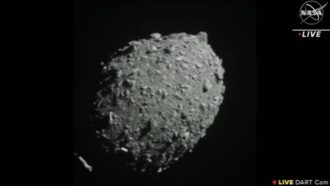
NASA’s DART spacecraft crashed into an asteroid — on purpose
This mission could provide a blueprint for how to deflect a killer asteroid, if one is ever found headed for Earth.
- Space
Scientists Say: Telescope
Almost everything we know about the universe around us, we know thanks to telescopes.
- Space
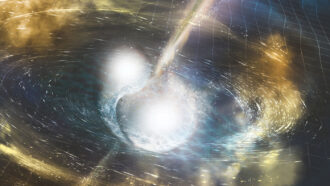
Let’s learn about gravitational waves
Gravitational waves offer scientists a new way to view extreme objects such as black holes and neutron stars.
- Plants
No sun? No prob! A new process might soon grow plants in the dark
Teamwork makes green-work! Collaborating scientists came up with an electrifying farming trick that could make sunlight optional.
- Space
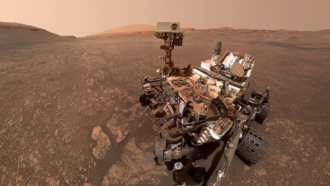
My 10 years on Mars: NASA’s Curiosity rover describes its adventure
Did life evolve on Mars? NASA’s Curiosity rover spent the last 10 years trying to answer that question. Here’s the story from the rover’s point of view.
- Space
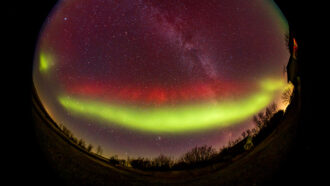
Amateur astronomers reveal clues to a mysterious double aurora
Stunning images from citizen scientists show an unusual pattern in ‘Northern Lights.’ They offer clues that may help astronomers better understand a curious red glow.
- Space
Awesome! Here are the James Webb Space Telescope’s first pictures
The first image shows ancient galaxies. Some reveal light that has been traveling 13 billion years to reach us.
- Earth
Earth’s rock collection hints at how to search for life elsewhere
A new way to sort minerals focuses on how they formed. It provides new clues about Earth’s crystal past and how to find life on other planets.
- Health & Medicine
Six months in space causes 10 years’ worth of bone loss
Even a year after recovery back on Earth, astronauts who’d been in space six months or more still had bone loss equal to a decade of aging.
- Planets
Scientists Say: Habitable Zone
The habitable zone is the region around a star where temperatures could be right for worlds to host liquid water.
- Space
Let’s learn about surviving a trip to Mars
Getting to and surviving on the Red Planet will take lots of innovation.
- Science & Society
Some scientists want serious research into UFOs. Here’s why
Science grapples with unknown phenomena all the time. Investigating “unidentified flying objects” shouldn't be different, researchers say.