
All Stories by Maria Temming
- Physics
Scientists Say: Ultrasonic
This word describes sound waves that have frequencies too high for human ears to hear.
- Space
Let’s learn about the Milky Way
At a glance, the Milky Way may look like just a disk of stars. But its structure is actually much more complex.
- Physics
Scientists Say: Supercool
When a liquid is supercooled, it has been chilled below its freezing point without freezing.
- Animals
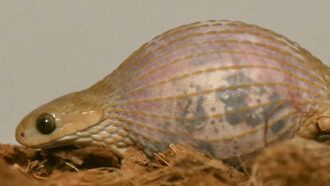
This egg-eater may have the biggest gulp of any snake its size
Slither aside, Burmese pythons. This little African snake has a truly outsized swallow.
- Archaeology
Let’s learn about Stonehenge
Questions remain about exactly who built Stonehenge and why. But some details are known about the site’s origins.
- Chemistry
Scientists Say: Rare earth element
Rare earth elements aren’t all that rare — but skyrocketing demand for these metals makes them precious.
- Animals
Toothed whales use their noses to whistle and click
Much as people do, toothed whales, such as dolphins and sperm whales, make noises in three different vocal registers.
- Animals
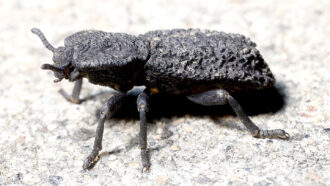
Let’s learn about beetles’ survival superpowers
Some beetle species can survive extreme pressure, dehydration or even getting eaten.
- Physics
Scientists Say: X-ray
X-rays are a type of light that doctors use to image the inside of the body. Astronomers use X-rays to explore the cosmos.
- Climate
Let’s learn about why summer 2023 was so hot
Human-caused climate change has played a big role in this summer’s historic heat.
- Tech
Scientists Say: Fiber optic cable
Whether you’re reading these words on a phone, computer or other device, you may have fiber optic cables to thank.
- Physics
Scientists Say: Radio Waves
Lightning, stars, supermassive black holes and more give off radio waves.